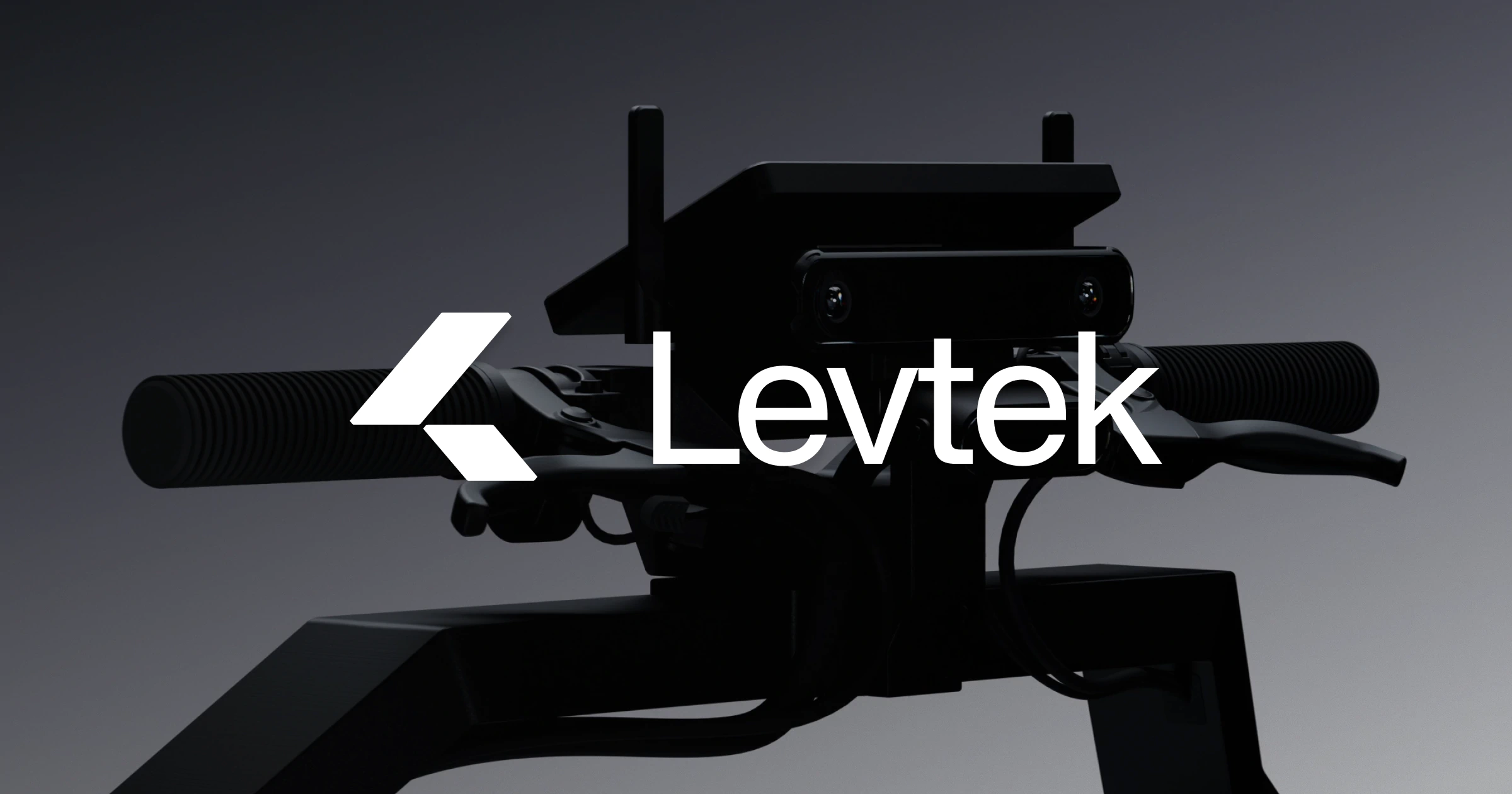
On paper, Levtek is a small Swedish company with a few employees, a couple of million SEK in revenue, and a registered purpose that sounds broad:
Design, development, manufacturing and sales of autonomous systems, robots, electric vehicles, and related software.
In reality, that purpose is showing up as something very specific: a ride‑on robotic platform that helps real people move through real environments faster and safer.
The hidden bottleneck: physical labor as glue
In factories, logistics centers, and industrial sites, the physical workforce is the glue:
- They connect processes that automation never reached.
- They fill in for missing conveyors, vehicles, and systems.
- They absorb all the chaos when things don’t quite fit together.
This glue is expensive. It burns people out. And it’s hard to hire for.
Levtek’s approach is to support that workforce directly: move people, equipment, and goods from A to B without forcing a rebuild of everything in between.
Why starting as a vehicle is a feature, not a compromise
Many robotics pitches start with full autonomy and work backward. Levtek starts with:
- A stable, intuitive vehicle that any worker can ride or walk with.
- Immediate ergonomic and time wins without any autonomy dependencies.
- A clear upgrade path into collaborative and fully autonomous modes.
That matters for three reasons:
- Adoption – people are more likely to trust and use something they understand immediately.
- ROI – you don’t wait for a multi‑month integration to see value.
- Resilience – if autonomy is offline, the platform is still useful as a vehicle.
You get a usable tool on day one, not just a promise of future autonomy.
Autonomy that grows with use, not just with updates
As the platform is deployed across more routes and shifts, Levtek’s system:
- Builds a richer spatial model of your site.
- Learns which paths, timings, and behaviors work best.
- Transitions from supervised to more autonomous operation where it’s safe and valuable.
You don’t have to “flip a switch” to go autonomous. The robot gets there with you, based on actual usage and data.
A different way to think about robotics in your operation
Instead of asking:
“Should we automate everything or nothing?”
You can ask:
“Which walking and hauling work could a Levtek handle this quarter?”
From there, the progression looks like:
- One department, one route, one Levtek.
- Then multiple routes, shared robots, and more autonomy.
- Then a fleet of cognitive carts quietly handling the dull movement so your people can focus on the real work.
Small Malmö company. Big shift in how autonomy shows up on the factory floor.
.webp)
.webp)
.webp)
